Material · Sisal (agave leaf fiber) and true hemp (bast fiber)
Sisal & Hemp Rope (Natural Fiber)
Stiffer and stronger than jute, with a pale golden color and a rougher, more “industrial” hand. The traditional choice for cat scratching posts, agricultural tying, and decorative or utility use where a harder-wearing natural fiber is required.
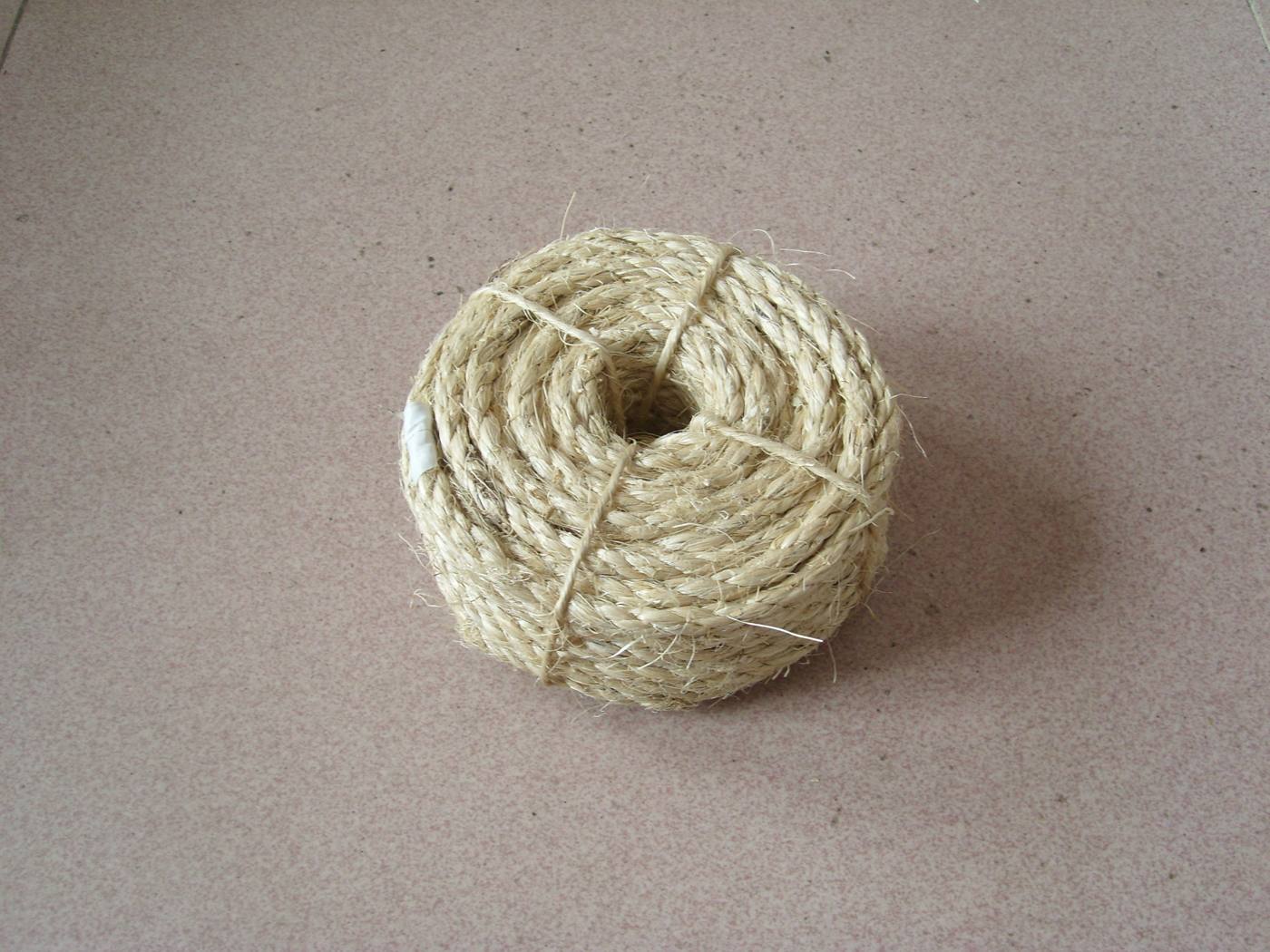
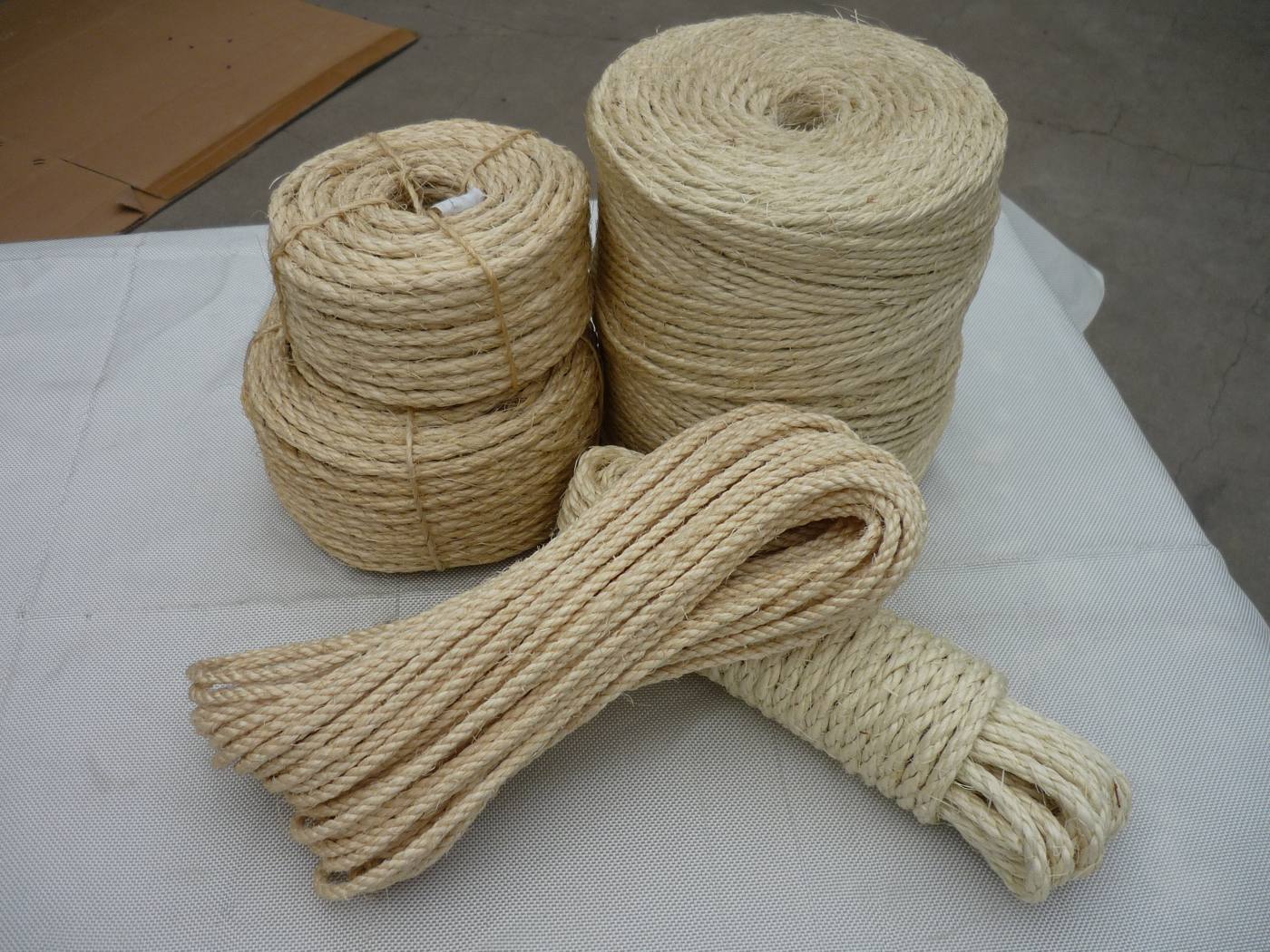
| Floats on water? | No — sinks |
|---|---|
| UV resistance | Poor — degrades on prolonged sun exposure |
| Stretch behavior | Low; not elastic like nylon |
| Water absorption | Absorbs water; can mildew if stored wet |
| Handling feel | Stiffer and rougher than jute; coarser hand, tighter twist |
| Property detail | |
|---|---|
| Fiber type | Sisal (agave leaf) or true hemp (plant bast) |
| Biodegradability | Yes — fully compostable at end of life |
| Strength | Somewhat higher than jute at the same diameter |
| Hand feel | Stiffer, rougher, more abrasion-prone against bare skin |
| Outdoor durability | Limited; better than jute for short-term outdoor use |
| Relative cost | Mid; varies with crop and origin |
Sisal and true hemp are the stiffer, harder-wearing natural fibers of the rope trade. Sisal is made from the long leaves of the agave plant; true hemp (not to be confused with manila or jute) is a bast fiber. Both have a pale golden color and a noticeably rougher, stiffer hand than jute — and that stiffness is exactly why sisal is the dominant fiber for cat scratching posts worldwide.
Like other natural fibers, sisal and hemp absorb water, can mildew if stored wet, and lose strength in prolonged UV. They are biodegradable and look right at home in rustic retail, agricultural tying, and traditional or theatrical applications. They are not for any structural, safety, or permanent outdoor use.
For buyers, the choice between sisal/hemp and jute is about feel and use: sisal is stiffer and tougher, jute is softer and more decorative. Both are commonly supplied as 3-strand twisted rope in hanks, balls or pre-cut retail packs — confirm the exact fiber (sisal vs hemp), origin, and any color treatment in the RFQ.
Best suited for
- Cat scratching posts and animal scratching products (the standard fiber)
- Agricultural tying and rough utility where a stiff natural rope is wanted
- Decorative and rustic retail where a coarser, paler fiber is preferred to jute
- Traditional maritime, theatrical and event use where a natural rope is required
Usually not the right choice for
- Skin-contact pet toys where the coarser hand may irritate (cotton or jute are softer)
- Load-bearing or safety-relevant use
- Long-term wet or outdoor exposure
Need a Sisal (agave leaf fiber) and true hemp (bast fiber) product quoted?
Send the target construction, diameter, length, quantity, packaging and application for review.
Constructions made from Sisal (agave leaf fiber) and true hemp (bast fiber)
Products in Sisal (agave leaf fiber) and true hemp (bast fiber)
Related reading
Natural Fibre Rope Compared: Jute, Sisal, Hemp and Cotton
Why buyers still specify natural fibre rope — how jute, sisal, hemp and cotton differ in strength, hand feel, water behaviour and appearance, and which one suits landscaping, building, decoration and retail.
Rope Materials Compared: PP vs PE vs Nylon vs Polyester vs Cotton
The five common rope fibers on one table: buoyancy, strength, stretch, UV life, wet behavior and cost — and the one-line rule for when each material wins.
How Knots Weaken a Rope — and How to Keep the Loss in Check
Different knots reduce rope strength by different amounts, why the bowline and figure-eight are common choices, and how knot choice interacts with material.