Construction · twisted
4 Strand Twisted Rope
A rounder, fuller twisted rope than 3-strand, often built around a core — common in larger diameters for marine and industrial use.
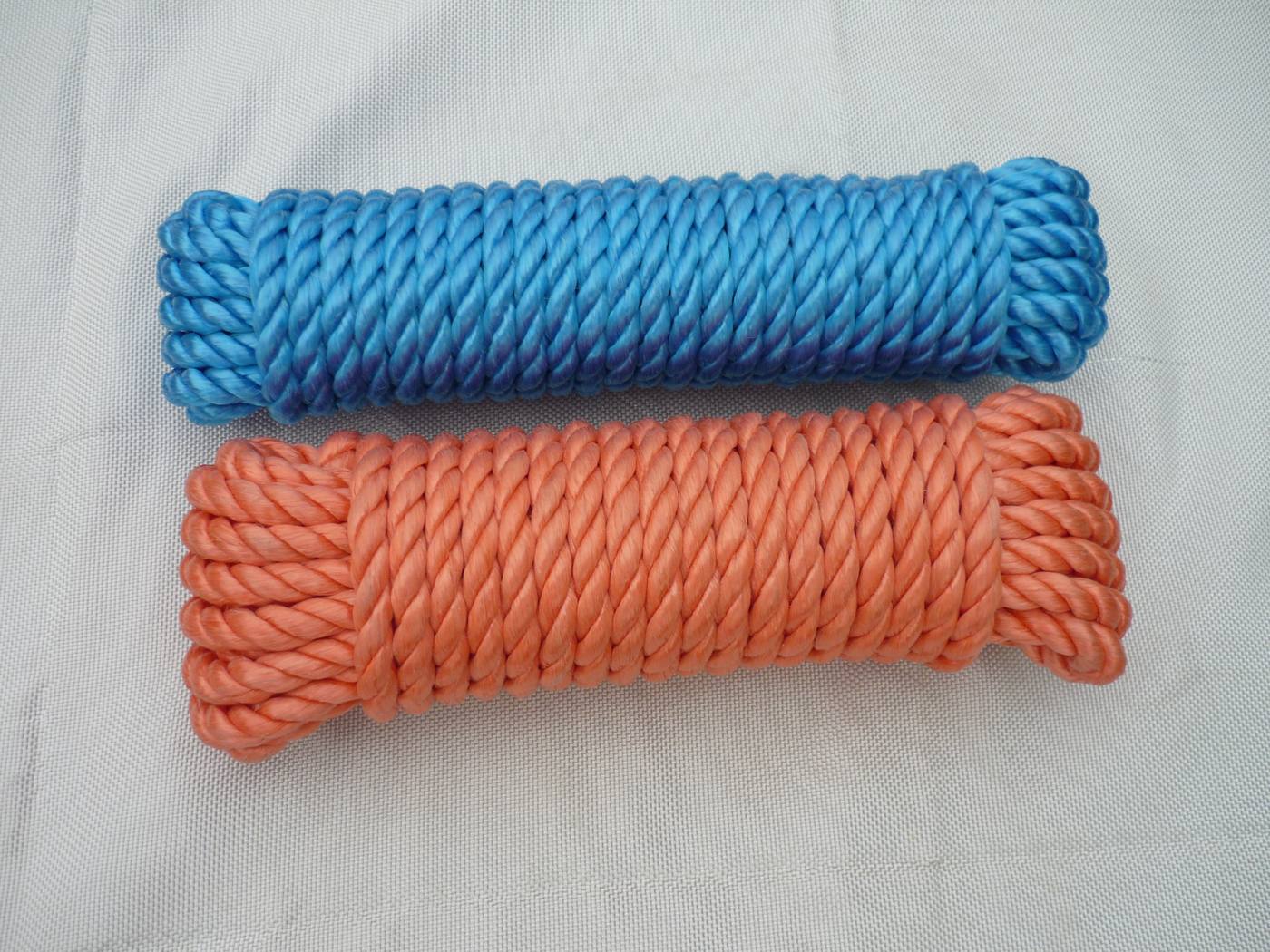
How it is built
Four strands twisted around a central core (fiber or wire in some industrial versions). The extra strand fills the spiral, giving a rounder cross-section.
How it handles
Rounder and smoother than 3-strand with similar economics; splices similarly but with one more strand to manage.
| 8 mm – 60 mm |
Structure illustration placeholder — technical drawing will be added.
Strengths
- Rounder profile than 3-strand — sits better in winches and chocks
- Core adds bulk and shape stability in large diameters
- Similar cost level to 3-strand twisted
Limitations
- Slightly harder to splice neatly than 3-strand
- Same kink/rotation behavior as twisted rope generally
- Less common than 3-strand in small diameters
Common uses
Ready to discuss this product?
Send the target size, length, quantity, packaging and destination for specification review.
Common materials for this construction
Polypropylene Rope
The most widely used synthetic rope fiber: lightweight, floats on water, rot-proof and economical. The default choice for packing, marine utility and agriculture.
Polyethylene Rope
Soft, flexible and floatable — the standard fiber of the fishing and aquaculture industry, and a good choice for cold-weather or repeated-handling utility rope.
Nylon Rope
The strongest of the common synthetic rope fibers, with high elasticity that absorbs shock loads — the classic choice for anchor, mooring and dock lines.