Material · Polypropylene (PP)
Polypropylene Rope
The most widely used synthetic rope fiber: lightweight, floats on water, rot-proof and economical. The default choice for packing, marine utility and agriculture.
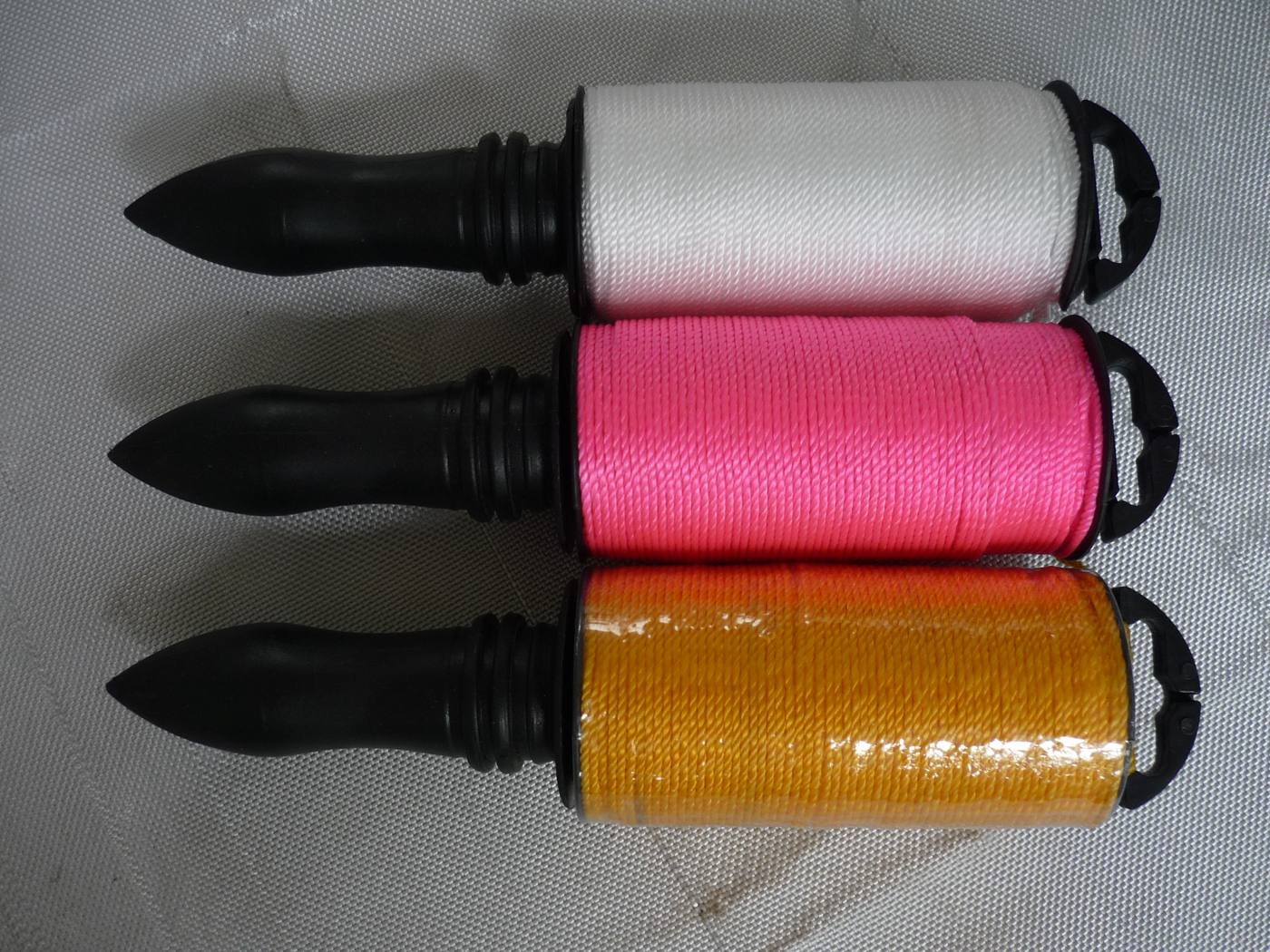
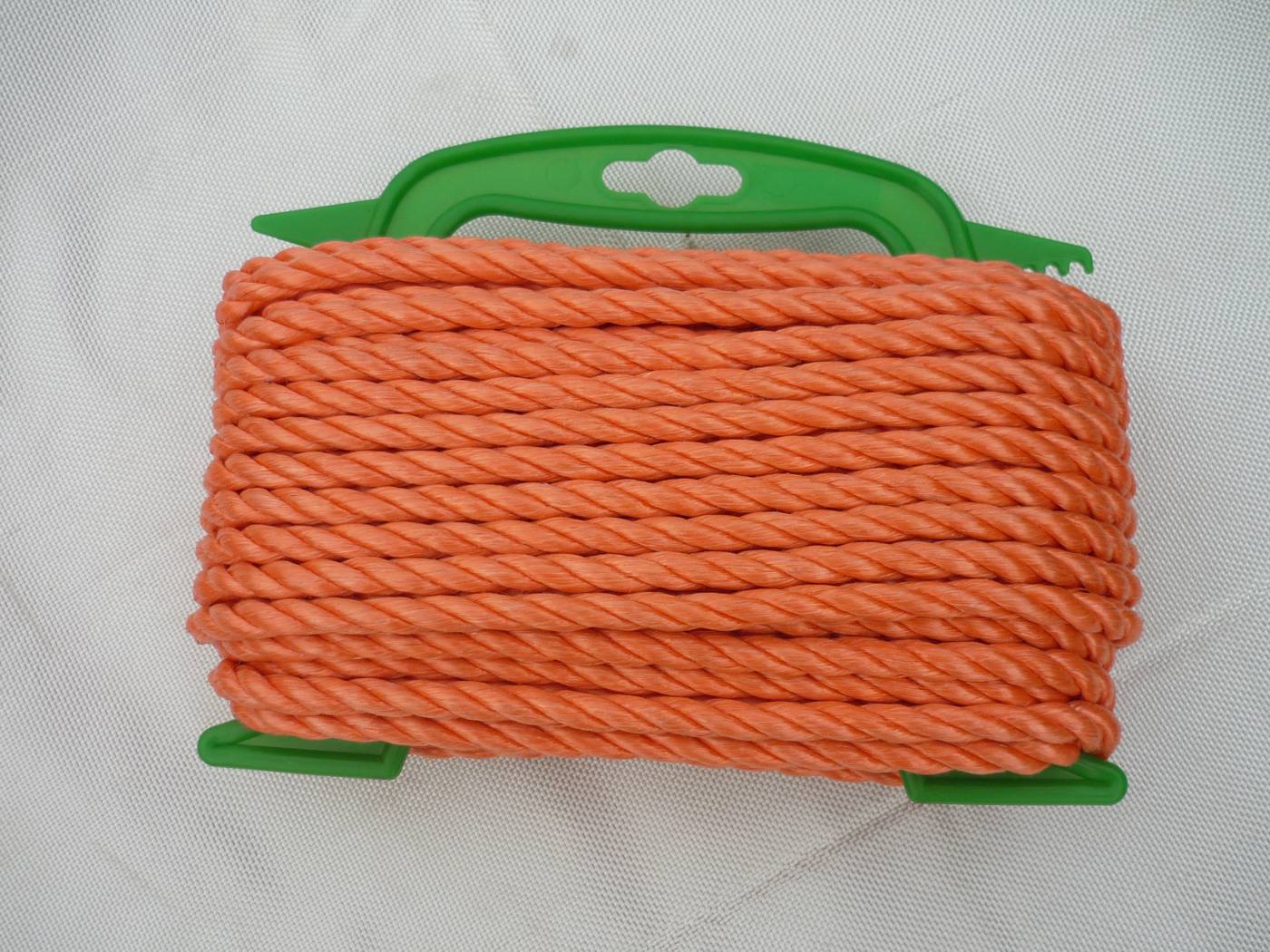
| Floats on water? | Yes |
|---|---|
| UV resistance | Moderate — needs UV stabilization for long outdoor exposure |
| Stretch behavior | Moderate elongation under load |
| Water absorption | Does not absorb water |
| Handling feel | Light, slightly stiff; split-film versions are rougher, multifilament versions smoother |
| Property detail | |
|---|---|
| Specific gravity | ~0.91 — floats on water |
| Water absorption | Effectively none |
| UV resistance | Moderate; UV-stabilized grades recommended outdoors |
| Melting point | Low compared with polyester/nylon — avoid high-friction heat |
| Chemical resistance | Good resistance to most acids, alkalis and solvents |
| Relative cost | Lowest of the common synthetic fibers |
Polypropylene is the volume fiber of the rope industry. Because it is lighter than water, a PP rope floats — a decisive advantage for marine utility, aquaculture and any application where a sinking line would foul propellers or disappear below the surface.
PP rope is produced in several yarn forms that behave differently: split film (flat, economical, used for baler twine and packing rope), monofilament (round, stiffer, abrasion tolerant) and multifilament (fine fibers, softer and smoother handling). Two ropes both labelled “polypropylene” can therefore feel and perform quite differently — the yarn form and construction matter as much as the fiber name.
The main limitation of PP is sunlight. Unstabilized polypropylene degrades under UV exposure, so for permanent outdoor use you should specify UV-stabilized (UV-treated) material. For multi-year outdoor exposure, polyester is usually the better fiber.
Best suited for
- Packing, bundling and general tying
- Marine utility lines where floating matters (buoy lines, throw lines, water ski)
- Agriculture: baler twine, greenhouse tying, tarp lines
- Truck and trailer cargo tying (non-lifting)
Usually not the right choice for
- Long-term outdoor use without UV-stabilized material
- Applications with high friction heat or near heat sources
- Safety-critical uses (lifting, fall protection) without certified specifications
Need a Polypropylene (PP) product quoted?
Send the target construction, diameter, length, quantity, packaging and application for review.
Constructions made from Polypropylene (PP)
3 Strand Twisted Rope
The classic rope construction: three strands twisted in a spiral. Economical, easy to inspect and the easiest construction to splice.
4 Strand Twisted Rope
A rounder, fuller twisted rope than 3-strand, often built around a core — common in larger diameters for marine and industrial use.
Diamond Braided Rope
A flexible maypole braid, with or without a core. Soft handling, smooth surface — the everyday “hardware store” braided rope and utility cord.
Hollow Braided Rope
A core-less braid that is light, flexible and — in polypropylene — floats. Famously easy to splice; the classic water-ski and buoy line.
8 Strand Plaited Rope
Eight strands plaited in pairs — a square-ish, torque-free large-diameter rope. The workhorse mooring construction for commercial marine.
Split Film Twine
Flat PP film split into ribbons and twisted — the cheapest way to tie things. The material of baler twine and economy packing twine.
Multifilament Twine
Twine twisted or braided from many fine filaments — soft, flexible and knot-friendly. Used for marine utility, net making and soft-hand tying.
Products in Polypropylene (PP)
PP 3 Strand Twisted Rope
An economical three-strand polypropylene rope used for packing, transport, farm and general utility programs.
PP Split Film Twine (Packing Twine)
Flat polypropylene film, slit and twisted into the most economical tying product in the industry.
PP Diamond Braided Rope
A soft, flexible braided polypropylene rope with the familiar diamond surface pattern.
PP Hollow Braided Rope
A core-less braided polypropylene rope used where flexible handling, easy splicing and surface flotation are relevant.
PP Multifilament 8 Strand Mooring Rope
An eight-strand polypropylene rope for mooring inquiries where large diameter, handling and flotation are part of the technical requirement.
PP Baler Twine
Purpose-made split film twine for hay, straw and forage baling: consistent, knot-free spooling and controlled knot strength so the baler ties every time.
PP Knotted Cargo Net
Knotted polypropylene netting for securing and covering cargo on trucks, trailers and containers.
Related reading
PP Rope vs PE Rope: What Is the Actual Difference?
Both float, both are cheap, both are everywhere — but polypropylene and polyethylene rope behave differently in hand, in cold and over time. A buyer's comparison.
Rope Materials Compared: PP vs PE vs Nylon vs Polyester vs Cotton
The five common rope fibers on one table: buoyancy, strength, stretch, UV life, wet behavior and cost — and the one-line rule for when each material wins.
Which Ropes Float? Buoyancy by Material — and When It Matters
Polypropylene and polyethylene float; nylon, polyester and cotton sink. Why buoyancy decides marine, aquaculture and water-sport rope choices — with product links.
Which Rope Is Best for Outdoor Use? UV, Weather and Service Life
Sunlight destroys the wrong rope in a single season. How PP, PE, nylon and polyester compare outdoors, when UV stabilization is enough, and when to upgrade to polyester.